
Oobleck and the Scholar: Entice Rather than Convince
What’s oobleck? I had to ask too.
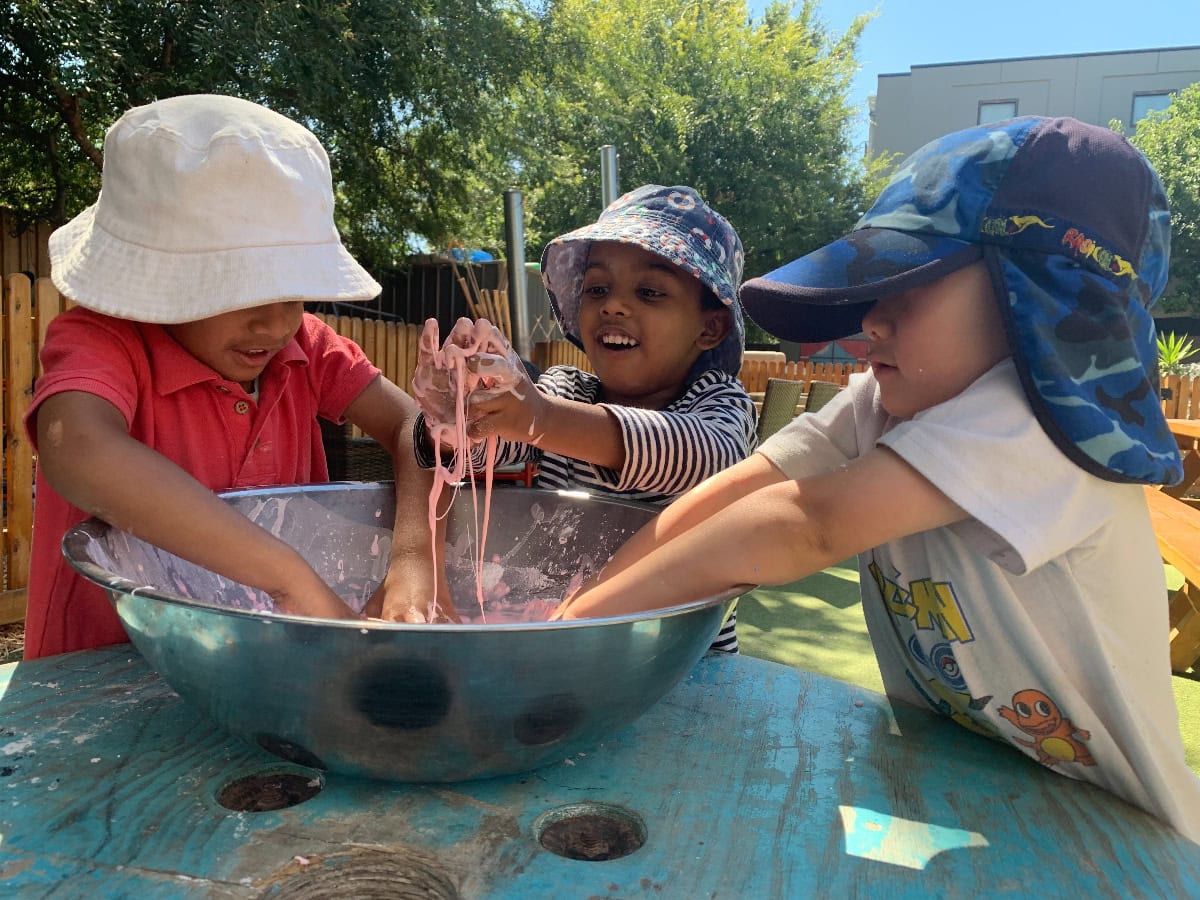
It’s made of cornstarch and water, but it’s weird. At rest, it behaves like a liquid. Apply pressure, and it behaves like a solid. So if you hit it, it’s hard and your hand bounces off. Rest your hand on top, and you can sink in slowly. Obviously once you’ve seen it, you want to touch it.
I told you all that so I could tell you this other story, but remember that feeling of curiosity.
I was working with an Oklahoma State University Rural Scholar, an undergraduate student placed in a rural community for the summer to work on university research projects and to help the community. This scholar’s assignment was to get oobleck kits into the hands of parents. The goal behind that goal was to get more kids interested in science-y subjects and build toward a future rural workforce with those skills.
The assigned approach was classic old way: make a list of local organizations and the contact people, then reach out, and ask them to let the scholar try to convince parents to accept a kit for their kids to play with.
I said to the scholar, forget all that convincing of adults. Entice kids instead.
Go to events in the community. Set up a big table of oobleck. Let kids play with it. Then say hi to the parents who are now standing there watching their child not want to leave. Now offer them a kit of their own. Zero convincing required.
The parents are not the goal. The organizations are not the goal. Even the kits aren’t the goal. The kid who can’t stop thinking about why that stuff acts so weird? That’s the goal.
Entice, rather than convince.
Why do we default to trying to convince people?
Because it feels like real work. Lists, contacts, outreach, follow-ups, number of kits: that’s a process you can document and report on. It follows lines of authority. It treats organizations as the key to reaching people.
The convincing approach puts the burden on the scholar to overcome resistance. The enticing approach puts the experience in front of people and lets curiosity do the work.
That’s the Idea Friendly Way. You’re not pushing. You’re creating the conditions for people to pull themselves in.
Try it at your next event
Whatever you’re trying to get people interested in, ask yourself: is there a version of this I can just put in front of them? A taste, a demo, a five-minute experience that does the convincing for me?
Try that out and let me know how it goes.
Photo: Experience pulls people in better than any pitch. Children discover oobleck’s strange properties through play. Photo CC by Alpha avlxyz at Flickr.