
Finding Volunteers from Younger Generations: from committees to activities
What makes you come alive? It’s not the committee list
Everyone knows everyone in small towns, right? Well… I live in a place with about 30 people, and I don’t even know everyone.
Next time you’re at an event in your town, look around. How many people could you name? A lot, I’m sure, but not everyone.
I was in Caldwell, Kansas, population 1,000, with a group of about 50 people in the room for a community conversation. There were people from all ages, and it became obvious that not everyone knew everyone else. I asked them all to introduce themselves, and that’s when I saw the generation gap.
The older people introduced themselves by the organizations they belong to and serve. One person said, “I’m on the chamber of commerce executive committee, I volunteer with the historical society and I’m on the Alumni Board.”
The younger people introduced themselves by the activities they enjoy doing. Another person said, “I love to garden. Some friends and I do a book club. Oh, and I have a little free library.”
I was fascinated! People saw themselves as part of organizations, or they saw themselves as enjoying specific things.
If we want to reach and engage younger people, we need to stop asking them to join organizations and serve on committees. Instead, we can tap what they already love and invite them to activities they’ll enjoy.
Introduce yourself by activities, not organizations
I tried this again in a similar setting in Potlatch, Idaho, population 800. The whole range from high school students to older folks were there, along with some folks from outside organizations. I asked everyone to introduce themselves by what they like to do, not by organizations or job titles.
And it was interesting! Far more interesting than the usual introductions with the same few organizations being mentioned. I learned more about people I already knew, and I got a better sense of people who were new to me.
It put the emphasis on the people and what they are doing, not the organizations.
I watched as they made meaningful connections. The high school students connected with the older people at the arts council; they’re going to create fanciful musical instruments together for a public art sculpture thing. The person heading up the community garden connected with a new resident interested in self-sufficiency.
I was watching their community come together.
Interests build connections
Surveys show people want to engage and connect with those around them, but they are not finding it easy. We’ve lost a lot of traditional connection points from our daily lives. And we’re seeing AI change the tasks people do and the very nature of work. While that plays out, our interests take on even more meaning.
Identifying our interests, then looking for ways to do them with others can help us connect no matter what the future brings.
Do you like reading? Join a book club, or a silent book club. Start a reading group. Ask at the library if there are existing reading groups you could be part of. Ask around whether schools, nursing homes, or libraries need volunteers to read with others.
Don’t make it hard. Just take a chair and a book to the sidewalk and read in public.
Pick one activity that helps you connect with others in a way you’ll enjoy.
Add introductions by interest to your next event
Next time you have a group together in person, make time for people to introduce themselves. And take it a step further and ask them to share their interests, what they already love to do, or activities they enjoy.
Try that out and let me know how it goes.
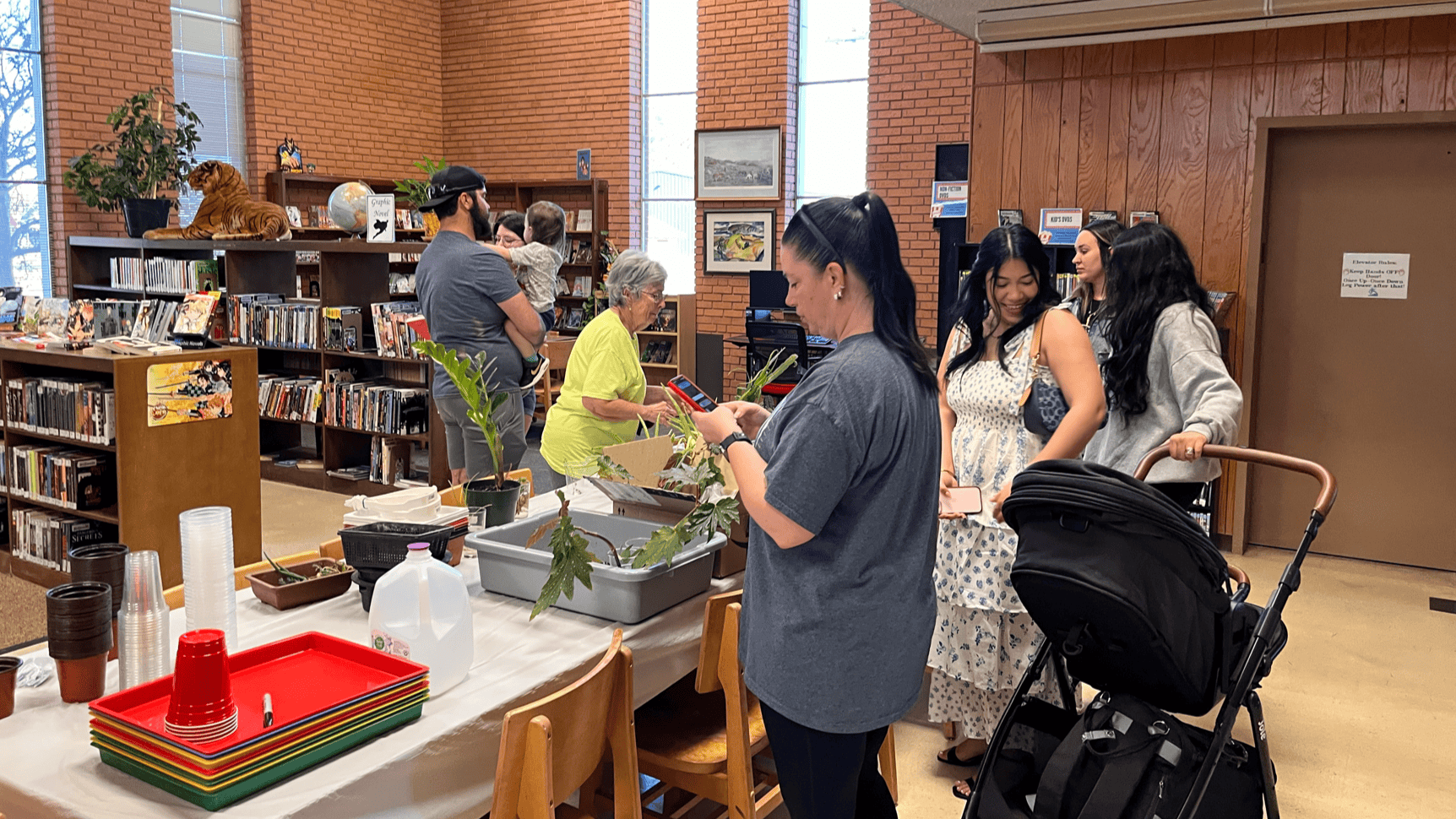
Photo: Shared interests create connection: community members of all ages gather for plant swap at Alva Public Library, Oklahoma. Photo by Becky McCray.