Even a Town of 300 Has Divisions
I visited Uniontown, Washington, in 2024, touring with Paul Kimmel and the Inland Northwest Partners. Uniontown’s population is 300 in town and 1,200 in the surrounding area. That’s definitely a small town. But that doesn’t mean it’s a unified town with a uniform sense of place and connection.
Uniontown added a housing addition in the 2010s that has brought new residents. The issue is that it feels separate from the “old town.”
New town residents have to walk all the way down the hill on a long sidewalk that curves away from the old town. Then they walk past the empty land along the highway until they reach the first “old” houses. Then they walk down two more blocks of sidewalk with a waist high retaining wall on one side and overhanging trees that drop pine needles and cones and make a mess on the sidewalks. On the other side are cars and pickups parked on the grass between the sidewalk and the street. If they make it through all that, they’re downtown.
It’s not surprising that the people in the housing addition organize their own community events up on the hill. Why make that trek or drive into town for Halloween treat events or the Easter Egg Roll when they could make their own smaller version with their close neighbors?
What the town leaders who live in the old town asked me was, how could they better connect with people in the new town?
One, grab a broom and clean up those sidewalks. Work with residents on relocating the parked vehicles. Maybe even paint or decorate the retaining walls, in cooperation with the homeowners along the sidewalk.
Two, go meet the people where they are, at the addition. Learn more about their events. Go participate in those events! You can’t get to know people by waiting for them to come to you or by telling them about your plans and your ideas and your events.
You have to listen to them. Then start to work together to think of ways to bridge the distance. That’s how you will bring the two parts of town together.
In this same town, there’s also an RV park with 13 spaces on the other end of town. Most residents are there for a long term stay for work, like traveling medical professionals working in nearby larger cities.
This is another opportunity to reach out to people who are here right now and meet them. What are their needs? There are not many services on site, so do they need a laundromat? Places to eat? What hours are they actually “home” in Uniontown? Do they have any hobbies or things they like to do while staying here? There’s a lot of arts and crafts in Uniontown, so are there any artists staying at the park? What kind of events or activities might they like to be part of or help create?
This is who lives here now. They are important. People don’t have to move here permanently to be part of the community.
And that applies to your town, too, of course.
Take a moment to think about different parts of your community. Who is here now that could be better connected? Maybe you have some housing additions that aren’t well connected to your main town. It might be seasonal residents like camp owners, snow birds, or repeat vacationers. Maybe traveling professionals like in the RV park, or students at a college or university.
You can’t get to know them by waiting for them to come to you. How can you go to them?
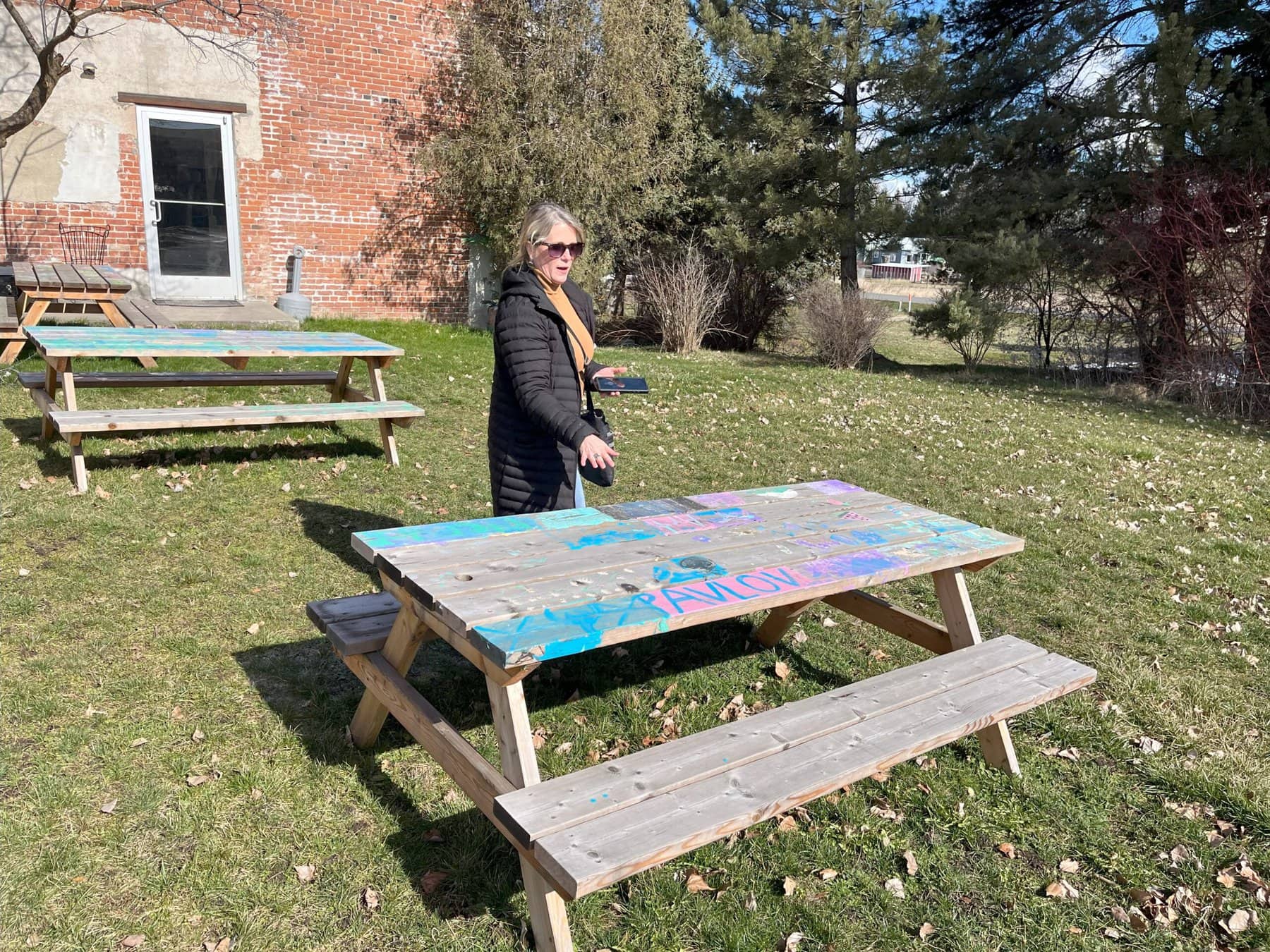
Photo: There’s a great open greenspace common for events in downtown Uniontown, Washington, if you can just make it there. Photo by Becky McCray.