The Idea Friendly Method works WITH your brain (however YOURS works)
You don’t have to become a different person to be Idea Friendly
I handed out notecards at the Yorkton, Saskatchewan, Steaks and Stems event. They are just a postcard-sized handout I use at almost every talk. It has the three steps of the Idea Friendly Method printed at the top: Gather Your Crowd, Build Connections, Take Small Steps. Blank space below for people to jot down their ideas.
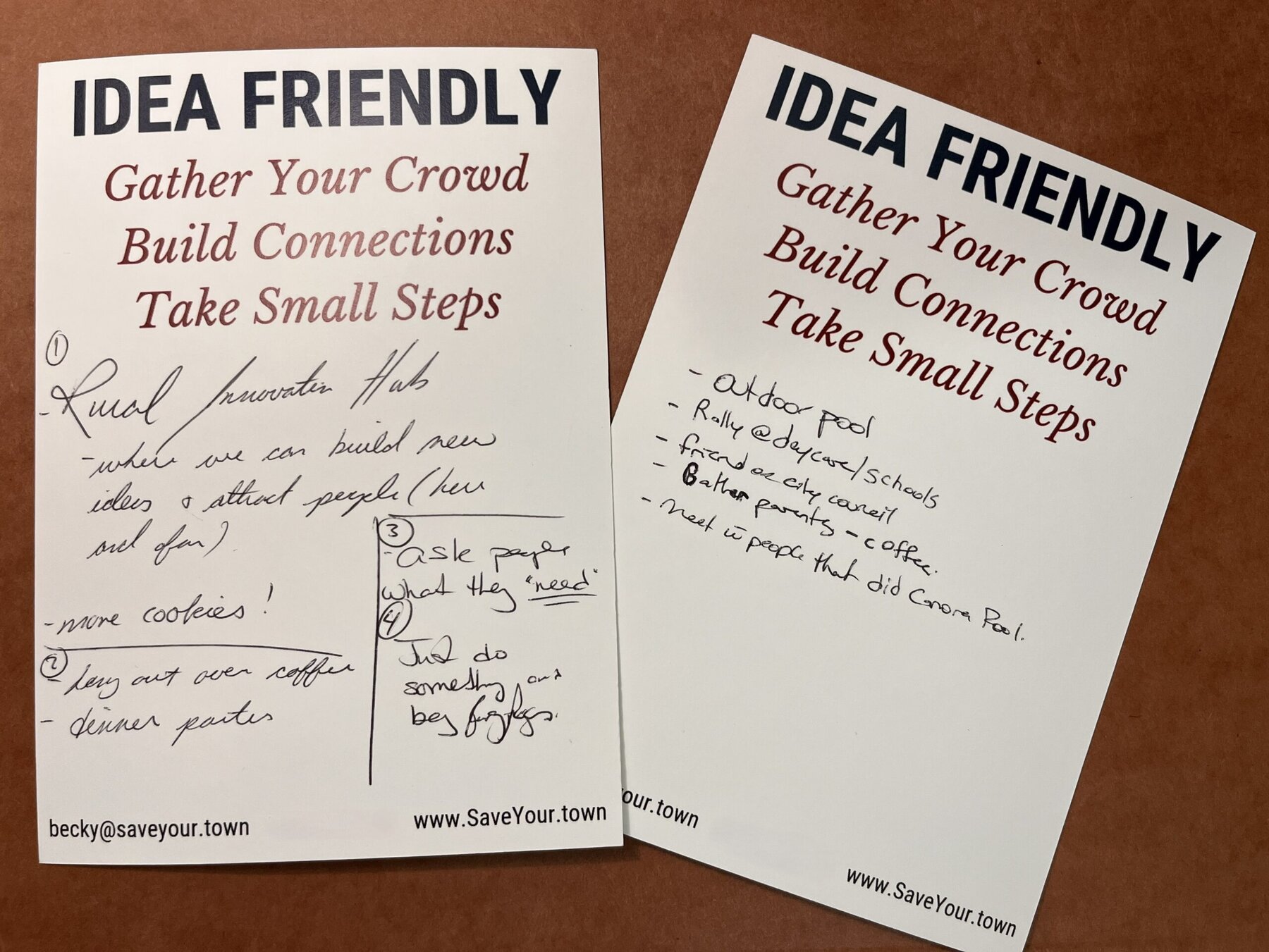
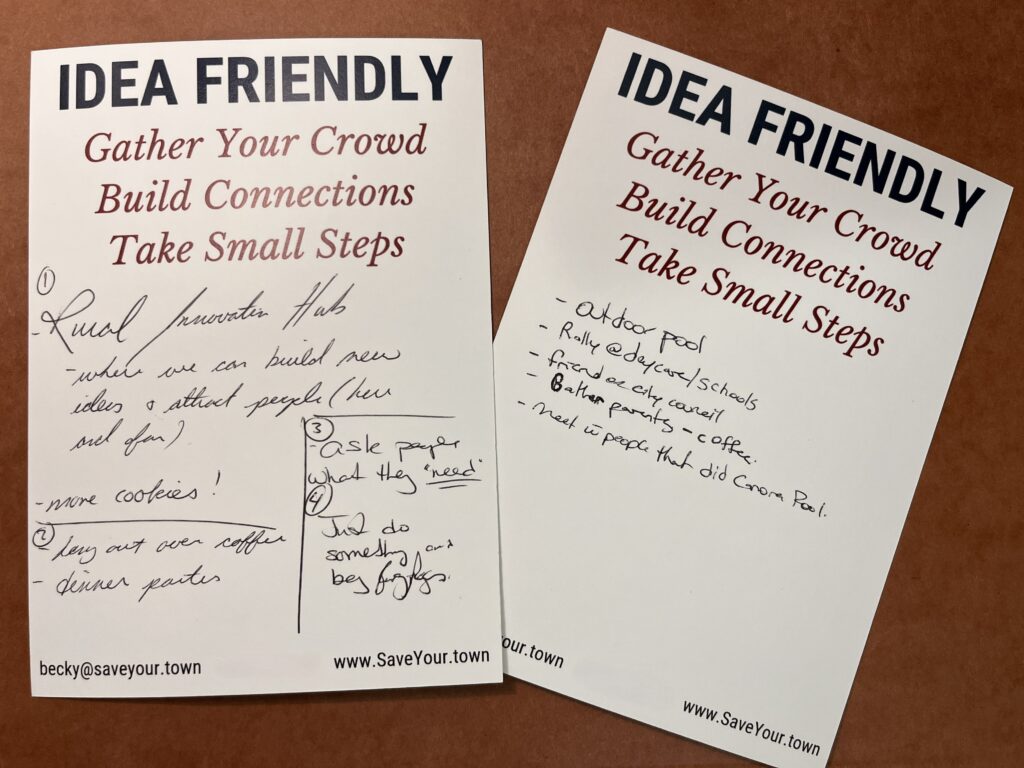
At the end of my talk, two people showed me what they’d written. I had to take pics, because they were such a perfect example of how different people’s brains work.
The Idea Friendly Method works with you, however your brain actually works.
Two completely different sketches of action
The first person wants to create a Rural Innovation Hub: a place where their community could build new ideas and attract people, both local and from away. Below that, they’d mapped out their next moves:
- Lay out over coffee
- Dinner parties
- Ask people what they “need”
- Just do something and beg forgiveness
The second person wants an outdoor pool for their town. Their notes looked totally different:
- Rally @ daycare/schools
- Friend on city council
- Bother parents – coffee
- Meet with people that did Canora Pool (Canora is a nearby town)
Visually, their handwritten notes couldn’t look more different, but the thinking looks a bit different, too. One’s thinking about building something big and transformative. The other’s focused on one concrete thing their community needs. One’s approach feels more structured, the other more action-oriented.
But here’s what matters: both of them are doing the Idea Friendly Method perfectly for who they are.
You don’t have to change how your brain works.
Starting the Hub by gathering, connecting, taking steps
Look at what the Hub person is thinking. They’re not writing a feasibility study or forming a committee.
Gather Your Crowd: They’re going to lay out the idea over coffee. Maybe go deeper at a dinner party. These casual gatherings are the enticing activities that will attract their crowd.
Build Connections: While people are together, they’ll ask what people need. Then they can connect folks to each other and to the resources that matter.
Take Small Steps: Instead of waiting until everything’s perfect, they’re going to “just do something and beg forgiveness.” Host that first coffee. Throw that dinner party. Start building the hub by creating the experiences that will become the hub.
As someone whose brain likes structure, I think I see myself in the outline with numbers and boxes and clear lines. But the person who made these notes is not getting trapped in endless analysis. They can see the next steps and the big goal without needing a 50-page strategic plan and feasibility study.
Getting a pool by talking to people
The Pool person’s notes look more basic. No numbers, no boxes. Just a short bullet list.
Gather Your Crowd: Clearly they know that people with kids are their crowd. And those folks are busy, so it makes sense to rally people where they already are, at daycare and schools.
Build Connections: They’re connecting to resources (that friend on city council) and connecting to more people (bothering parents over coffee until enough people care).
Take Small Steps: Along with those rallies, they are going to learn from the people who did the pool project at the nearby town of Canora. Finding out what worked for someone else counts as Building Connections, too.
My thought is this person’s brain says “let’s just do this thing.” The Idea Friendly Method can keep them from spinning out into chaos. They know who to talk to, where to connect, what to learn. They have a specific next step.
Your brain works how it works
I love these two cards because they show two people adapting the method to their own ideas.
You don’t have to become a different person to make change in your town.
If you’re more of a planner, the Idea Friendly Method gives you steps without trapping you in the planning phase forever. You can think things through AND still take action now.
If you’re more of a “let’s try it and see” person, the method channels your energy. You’re not constantly pulled aside by all the options. You’re connecting with people and learning as you go.
Both people walked away from that keynote with a sketch of action that fits them perfectly. Not a binder full of strategic plans. Not a vague hope that someday things will be different. A postcard with enough clarity to start.
That’s all you need.
What fits on your postcard?
Think about the idea that’s been rattling around in your head: the thing you wish existed in your town.
You don’t need to figure out every detail before you start. You need three things:
- An activity that will attract the people who care about this
- Ways to connect those people to each other and to what you need
- One small step you can take now
However your brain works–planner, action-taker, somewhere in between–the Idea Friendly Method works with you, not against you.
What would you write on your postcard?