
Kathryn dragged me through the rain to show off her Idea Friendly experiment
If it doesn’t work, we can try something else
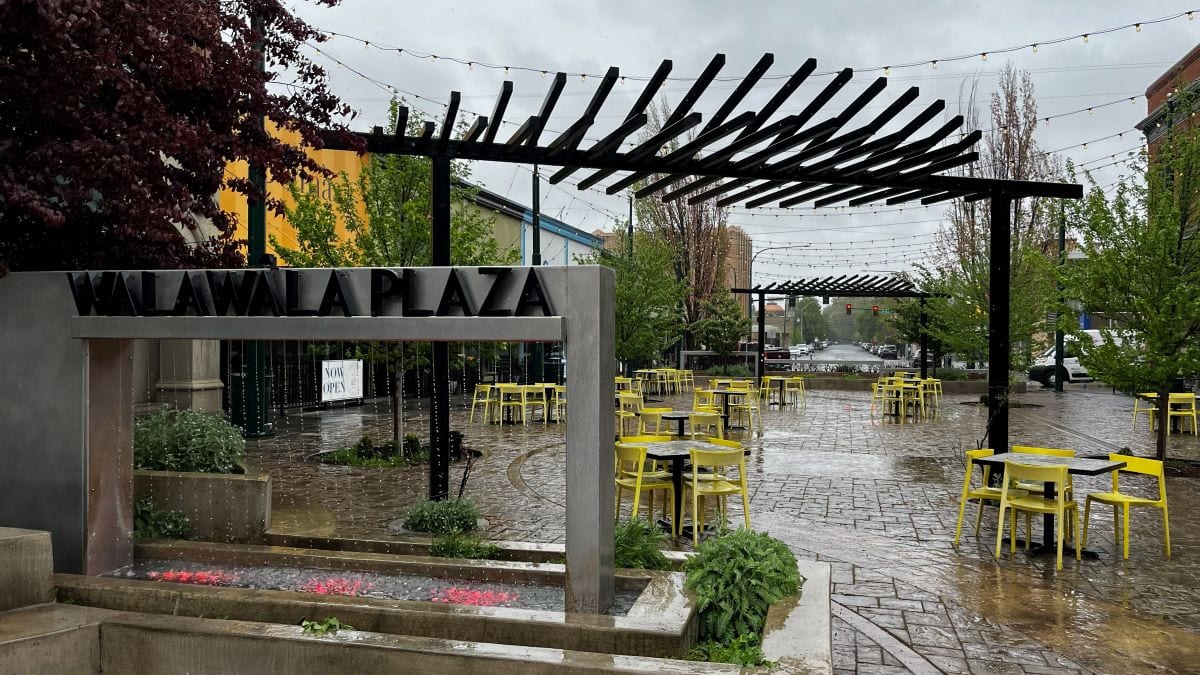
I was in Walla Walla, Washington, population 34,000, on the rainiest day. Kathryn Witherington was showing me around downtown. What stood out was the difference between the perfectly planned park and the messy plaza experiment.
The plaza started as an experiment.
It was during COVID. Restaurants couldn’t serve inside. Somebody looked at half a block of downtown side street and said, essentially: what if we just closed it?
The string lights were already there. The parks department had wine barrel planters. They found some moveable tables and chairs, and they opened a plaza.
Kathryn said, “If it doesn’t work, we can take it down in like a day.”
That’s it. That’s the whole plan.
It was great! People loved it!
So they tried expanding the concept to more streets downtown. It was, in Kathryn’s words, an utter disaster. So they took it down. Someone in the community pushed back: “You would just change your mind like that?”
“Yeah,” Kathryn said. “It didn’t work.”
That’s Idea Friendly.
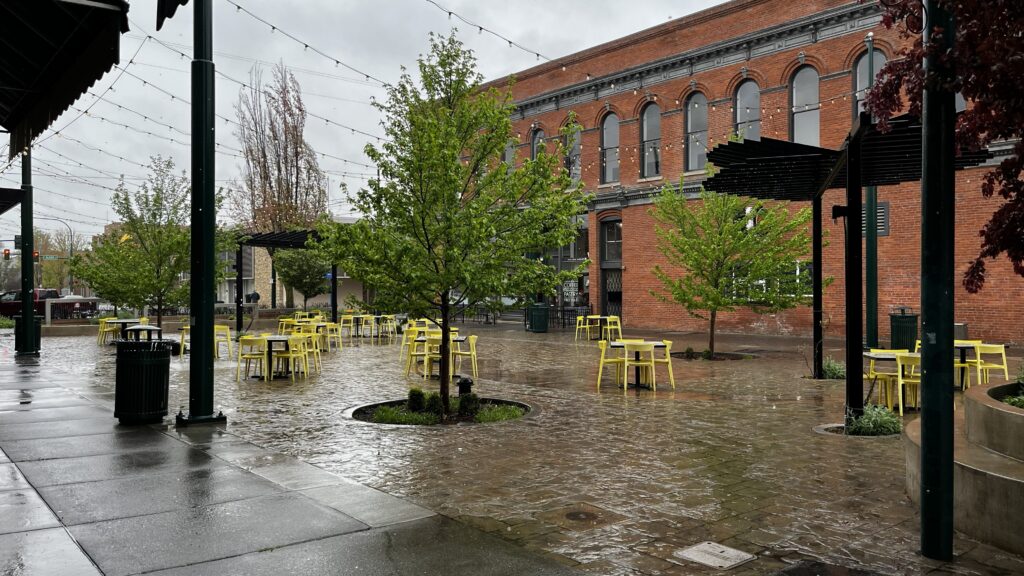
By the end of 2021 the indoor dining restrictions had changed, so the city council was considering shutting down the original plaza. The community weighed in: 204 out of 297 public comments were positive. The plaza stayed.
Kathryn pointed out that if they had started in 2020 by going to city council with a proposal to close a street and eliminate parking, everyone would have been outraged. They couldn’t imagine the plaza yet, but they knew what they’d be losing.
It’s hard when you ask people to give up something real for something they can’t see yet. But you can let them experience it first.
The plaza is a community living room.
Over time, the plaza grew and changed. The wine barrel planters gave way to a water feature. (They reused the planters in a nearby alley.) Stamped concrete that looks like stone pavers and more permanent improvements came only after the experiment proved itself.
On the day I visited, in the rain, I could still see why it worked. The yellow metal tables and chairs are moveable. That’s a community-building feature.
One day, Kathryn came downtown and saw a church youth group in the plaza. They had pulled the square tables together into one long row and had their potluck right there. Out of the church hall and into the community. That only happens because nothing is bolted down.
The planned park needs a vibe.
A block or so up from the plaza, Kathryn showed me the planned park. She told me about the standard yearlong planning process, community buy-in, the whole thing started before COVID. Then COVID happened, and they realized the plan needed to change. They adjusted the concert stage and scrapped the splashpad plans.
Six years later, the park is developing its own personality: an event host, a place with a stage, a different purpose than the plaza. That makes sense. But standing there in the rain, I could feel the difference.
The string lights felt so formal, pointed toward the stage, so organized. The pavement was all bland concrete that felt like a sidewalk or a parking lot. No businesses open onto the space. Overall: not as inviting.
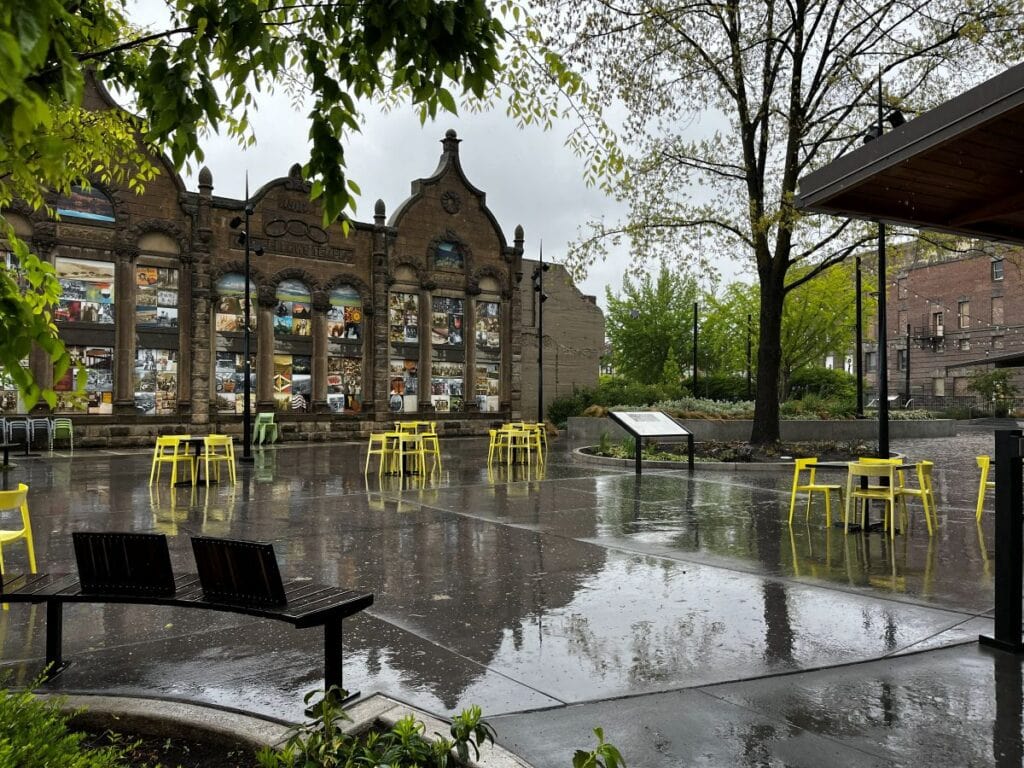
I made a few suggestions: randomize the string lights so they feel more casual. Add some texture to the pavement. Or just paint it! Even fake bricks, or something that breaks up the flatness.
Every town’s park is different, so your fixes will be different. The lesson is just: be less formal. Try things that feel more personal. See what happens.
Idea Friendly always works, in the end.
Not because every experiment succeeds (the expanded street dining was an utter disaster, remember) but because small steps let you learn, adjust, and keep going.